"Tap dancing is like a heartbeat -- rhythmic, alive, and full of energy."
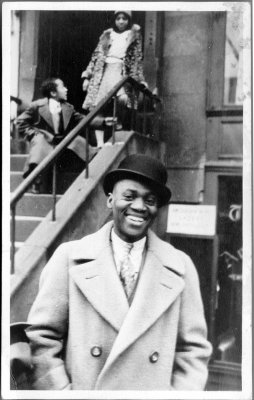
Bill "Bojangles" Robinson
"Tap dancing is about creating music with your feet."
Gregory Hines
"Tap dancing is an art form born out of perseverance and joy."
Savion Glover
"When you tap dance, you create music that everyone can see and feel."
Sammy Davis Jr.
"If you play a tune and a person don't tap their feet, don't play the tune."
Count Basie
African American Tap Dance Masters
Once Upon a Timestep . . .
Tap dance
is an indigenous American dance genre that originated with African dancers in early America. When dancing, they would articulate rhythmic patterns through chugging, scooping, brushing and shuffling movements of the feet.
Having developed over the course of several decades, the precise beginnings of tap dance are a mystery, but it is clear that tap dance was invented by African Americans. Black American dancers, who came to be called "Levee Dancers" throughout the south, were certainly mixing in, matching up, modifying and mocking the jaunty folk dance steps brought to America by European immigrants. But, jigs and hornpipes are not at all the same thing as tap dance. African American dancers incorporated many different elements from many different sources into their "Levee dancing" and this free-wheeling fusion of footwork is the foundation of the art form we now identify as tap dance.
White performers copied many of the intricate and ingenious steps of "Levee Dancers" and eventually the so-called, "Shuffle Dance style" found fame within the minstrel shows.
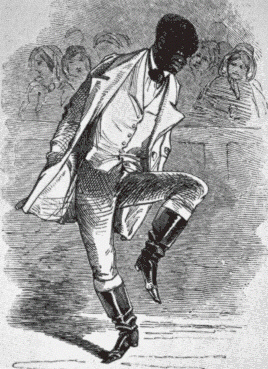
William Henry Lane
(1825 - 1852) was known as Master Juba and the "Juba dance," also known as "Pattin' Juba," was a mix of European jig, reel steps and clogging done to African rhythms. Lane became enormously popular in the mid 1800s. Importantly, one performance by Lane in 1842 was described as consisting of "sliding steps, like a shuffle, and not the high steps of an Irish jig." This was, many agree, the creation of tap in America as a theatrical art form and American jazz dance.
MASTER JUBA
No one really knows when the phrase "tap dance" was first used -- perhaps as early as 1850 in certain Black communities -- but amazingly, it didn't appear in print until around
1928
.
Merriam-Webster defines it two ways. (1.)A step dance tapped out
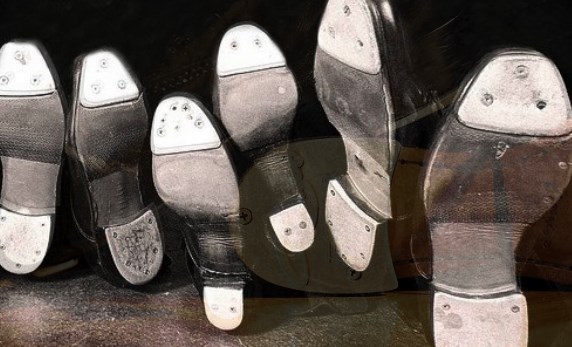
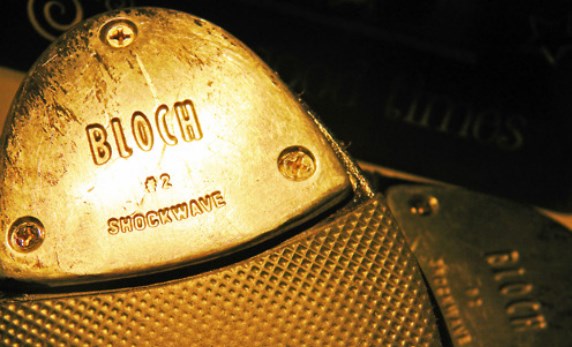
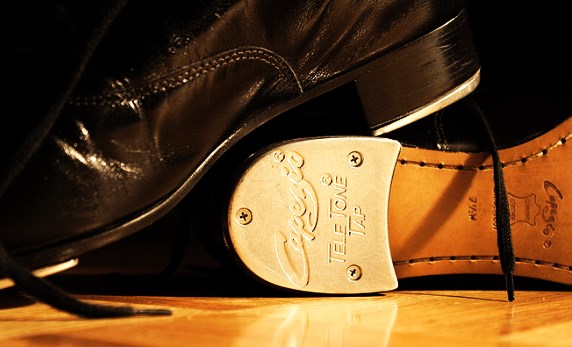
audibly by means of shoes with hard soles, or soles and heels, to which taps
have been added.
The second definition is less obvious, but perhaps, more revealing about the cultural concerns and social pressures that combined to create
the uniquely American art form: (2.)An action or discourse intended to rationalize or to distract.
Joe "the Plumber" Wurzelbacher,
2008, speaking about President Obama:
"Obama came to my neighborhood. All the neighbors
were outside asking him questions and uh --
I didn't think they were asking him tough enough
questions. So I thought, I'll go over there . . .
really corner him, get him to answer a question for
once instead of tap dancing around it. Unfortunately,
I asked the question -- but I still got a tap dance.
Yeah, and he was almost as good as Sammy Davis Jr."
President Bush - Killing Time
Merriam-Webster's alternate definition of tap dance as a duplicitous act of deception ("shim sham") or diversion ("shucking and jiving") points to the subtle political and cultural dynamic of African American liminality -- the double nature of the Black experience.
We wear the mask that grins and lies,
It hides our cheeks and shades our eyes --
This debt we pay to human guile;
With torn and bleeding hearts we smile,
And mouth with myriad subtleties.
from the Paul Laurence Dunbar poem,
"We Wear the Mask" - 1896
"Jazz is rhythm and meaning."
Henri Matisse
"Perhaps of all the most basic elements of music, rhythm most directly affects our central nervous system."
George Crumb
"Tap dancing is a blend of precision, rhythm, and soul."
Eleanor Powell
The early slave trade in America resulted in a rhythmic collision of cultures.
Slave-holders, already fearful of revolt,
began to panic when it was discovered that African Americans could communicate with
each other -- over long distances and in code -- through the use of drums.
All over the South, slave-holders moved to severely restrict African Americans' use of drums and other native
instruments in religious ceremonies.
But, African Americans held on to their traditional rhythms -- by transferring
them to their feet. The skill of tapping out complex rhythmic passages was widely developed,
and a subtle, intricate and vital physical code of expression was born.
By the mid-nineteenth
century,
African Americans had combined their footwork with Irish and British clogging
steps to create a style called "Buck and Wing," which would eventually became Modern
Tap Dance.
From its beginnings, the American art form of tap dance has been associated with
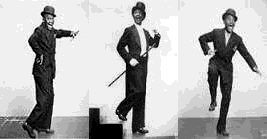
four dancers: William Henry Lane, George H. Primrose, King Rastus Brown, and Bill "Bojangles" Robinson.
Tap Dance and Irish Clogging do share so very deep roots.
Clog dances were often performed in wooden
soled shoes. In Irish clog dancing,
no thought is given to upper body movements. Almost rigid -- the shoulders and
arms are kept motionless. This trait is also evident in the early, Black "Buck
and Wing" style.
Reportedly, the most difficult of the
Irish clogs are the Irish Jigs and Hornpipes. In some of these, the feet can
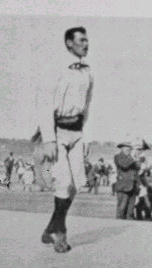
tap the floor four or five times per second. Irish clog dancer, John "Jack" Diamond (1828 - 1850) was considered one of the greatest "Jig Dancers" of his day.
Modern tap dancing slowly evolved though the years 1900 to 1920.
Irish dancer - 1905
The Hornpipe of England was an elaborate pantomime of English sailors -- mimicking
their duties while tapping their feet in time.
George Primrose is closely associated with a complicated Irish dance called the Lancashire Clog. Primrose, who clogged without wooden soles, is reported to have helped invent the style of routine that eventually became known as the Soft-Shoe.
The Soft-Shoe is a form of tap only done with soft soled shoes without metal
taps attached. Performers originally wore all kinds of shoes to perform the
Soft-Shoe and as time went on, the phrase, soft-shoe, was applied to many different
styles of tap. The most identifiable characteristics of soft-shoe are the smooth, graceful, floating movements and the delicate quality of the tapping -- performed in a very even and
relaxed cadence. Occasionally, this is referred to as the Sand Dance.
Barney Williams, in 1840, became the first professional clog
dancer to come to the U.S. The first professional clogging troupe in the U.S.
were the Irish Clog Dancers. During Clog contests of the 19th century, the
judges would sit behind a screen or under the dance floor, judging the sounds rather
than the body movements of the contestants.
For several decades clogging and tapping flourished successfully.
However, by the end of the 19th century, the Irish clog dance all but disappeared due to the mixing of traditional Clog steps and African American tap dances.
The Black Crook (1866), generally considered to be the first American book musical, featured Minstrel
and Clog dancers who danced very stiffly and gave rise to the term "Pedestal
dancer." The Pedestal dancer would climb upon a marbled pedestal with a 24-inch base and tap out a routine while posing as motionless as a statue.
In 1902, Ned Wayburn created a show called Minstrel Misses. He coined the
term "Tap and Step dance" in this musical play. This was the first time these
names had been used professionally. Wayburn's dancers wore light clogs with
split wodden soles.
Aluminum heel and toe taps did not appear until about
1910.
Buck and Wing
The precise origins of Buck and Wing (Buck Dance and Pigeon Wing) or Buck Dancing,
is a mystery. It is known to have been an early 19th Century dance routine -- done by both Minstrel and Vaudeville performers -- that featured a flat-footed, heavily accented syncopation. The dance employed a character and style purportedly drawn on portrayals of boisterous Black males -- called "Bucks."
Pigeon Wings and Wing Dancing refers to movements involving arm flapping and wild kicks. James McIntyre popularized certain variations of the rowdy, rhythmic Buck and Wing.
The man called
King Rastus Brown
is universally heralded as the undisputed best of the best Buck Dancers. Legend has it he always wore a coat covered in metals, a derby, and spats. Also known as "Mister Tap," King Rastus Brown is credited with the invention of the time-step. Ironically, although Brown's tap steps live on, very little personal information about the master tapper has survived.
The "Shout" or Ring-Shout was a union of dance and song which gave birth
to what were called camp meeting hymns and "work hollers" in the old south.
The Cakewalk became a very popular group dance because it had "attitude" wherein the dancing couples made fun of people who think themselves important and superior.
The Shim Sham or Shim-Sham Shimmy was a tap routine done by vaudeville
performers in the early 1900s and is still taught in many tap dance classes
today. The
Shim Sham's basic is the standard "Time Step" -- except the dancers
use a more shuffled rhythm rather than lifting the feet. (Shuffle-Step, Shuffle-Step, Shuffle Ball-Change, Shuffle-Step!) The Shim Sham also incorporates
a "break."
The Shim Sham Shimmy can be done as a solo, couple or group dance with each
person's arms around the next, and originally was done at the Savoy ballroom
to a song entitled "The Song of the Freaks," written by Luis Russell. Cab
Calloway's "Jittering Jitterbugs" musical short features this form of shim sham
routine.
The dance known as the Black Bottom started in New Orleans and later worked
its way to New York. Some say the Black Bottom was introduced by blues singer,
Alberta Hunter, however -- it has also been reported that the Black Bottom was
derived from "The Echo," an earlier dance.
The Black Bottom was formally introduced by Perry Bradford in Nashville,
Tennessee in 1919 when he wrote the song "The Black Bottom Dance." Bradford's
sheet music had the music as well as the dance instructions printed on them.
In 1926, the stage play "Dinah" featured the Black Bottom, and almost overnight the dance became as popular as the Charleston.
The Black bottom was basically a solo challenge dance, predominately danced
on the "Off Beat." It is thought to be the rhythmic prototype for modern
tap dance phrasing. The dance featured the slapping of the backside while
hopping forward and backward, stamping the feet, and gyrations of the torso
while making arm movements to the music with an occasional Heel-Toe scoop.
This, as with all other
dances, is a mixture of Jazz steps. The Basic step, however, is one dependent
entirely on rhythm. This step is 2 long stamps, first right, then left, followed
by 4 short ones; they are done off the regular beat of the music. Accompanying
this, the index finger on both hands is pointing up, and the eyes are rolling.
Any other steps may be done to lengthen the dance.
Black Bottom Lyric's:
(from George White Scandals - 1927)
Hop Down front and then you doodle (Slide) back,
Mooch to your left and then you mooch to your right,
Hands on your hips and do the mess around,
Break a Leg (Wobble) until you're near the ground
"The two elements the traveler first captures in the big city are extra human architecture and furious rhythm. Geometry and anguish. . .
At first glance, the rhythm may be confused with gaiety, but when you look more closely at the mechanism of social life and the painful slavery of both men and machines, you see that it is nothing but a kind of typical, empty anguish that makes even crime and gangs forgivable means of escape."
Federico Garcia Lorca
Flamenco Dancing
The Malagueña (Flamenco) shares with the Fandango the rank of the
principal dance of Andalusia. The Flamenco is a Spanish-Sevillian gypsy,
also known as Sevillian or Sevillinas. The dance is a non-formal folk dance from Andalucía,
Spain. The Flamenco is rich in rhythm and refined technique.
The Baile flamenco was originated by the gypsies of southern Spain and may
be of some Indian origin, however the gypsies believe they are descendents
from the Moors (the Moors invaded Spain).
The Granada gypsy calls himself gitano and the Sevillian gypsy calls himself
a flamenco. Spain has 47 provinces and they each have their own style of
dance.
The Flamenco has strict rhythmic rules one must follow to achieve the correct
look. Rhythm forms include Alegrias, Soleares, Bulerias, Farruca, Zapateado,
Tango and the Zambra. The foot and heel beats that the dancers perfect are
called Zapateado while the heel work done in Flamenco is called Taconeo.
La Argentina was one of the first to put Flamenco on stage.
Gregory Hines with Sammy Davis, Jr.
The Guiness World Book Records holder lists Roy Castle on January 14, 1973
- at 1,440 Taps Per Minute (24 per second).
Tap Dance has it's own language which may give some clues to the nature of
the art. The following are terms commonly associated with tap:
Shuffle ,Bojangles, Buck 'n Wing, Irish Clog, Buck Irish, Appalacian Clogging
,Black Face ,Minstrel, Vaudeville, Time Step, Riffs, Riffle, Ball Change,
Pearl Rolls, Patter, Keith Circuit, Tip-Tap, Steppen, Steppin, Claquettes,
Zapateado, Sapateado
Here are some associated names:
Juba, Eddie Cantor, Carlos,Hess, Eddie Leonard,
Buck and Bubbles, Patty Hughes, Barney Williams, Clarence Williams, Barney
Fagan, Bill "Bojangles" Robinson, Eddie Foy, Berry Brothers, Charles Shelton,
George Cohen, Nicholas Brothers, Sammy Dyer, George H. Primrose, Pat Rooney
Sr., Ray Bolger, Sammy Davis Jr., Jim Diamond, Paul Draper, Fred Astaire,
Buddy Ebsen, Nick Castle, Ann Miller, Marilyn Miller, Martha Raye, Carmen
Miranda, George Murphy, Eleanor Powell, Ritz Brothers, Condos Brothers, James
Cagney, Shirley Temple, Earl "Fatha" Hines, Maurice and Gregory Hines, Wayburn,
Bob Barron, Matthew Daugherty, Vance Holmes!



 com
com